

In veterinary dermatology, afoxolaner, an isoxazoline administered orally in dogs, has transformed the management of demodicosis, sarcoptic mange and infestations by fleas and ticks in particular. This article provides a comprehensive review ranging from pharmacology to the latest publications, whether with Nexgard or Nexgard Spectra.
Chapter 1 — Pharmacology of isoxazolines: afoxolaner and the afoxolaner-milbemycin oxime combination
1.1 Pharmacological class and structural data
Afoxolaner belongs to the family of isoxazolines, a pharmacological class of systemic insecticides and acaricides developed over the last decade. This class also includes fluralaner, sarolaner and lotilaner, each presenting distinct pharmacokinetic properties but a common mechanism of action on the nervous system of arthropods. Afoxolaner has a fluorinated structure conferring strong lipophilicity and high affinity for GABA receptors in invertebrates (Shoop 2014). The molecule was initially developed by Merial Laboratories, now integrated into Boehringer Ingelheim Animal Health. The positioning of afoxolaner within the class is defined by its monthly administration interval, intermediate between sarolaner (monthly) and fluralaner (every three months), and by its exclusive formulation as a chewable tablet for dogs, unlike fluralaner which is also available in topical or injectable formulation. Afoxolaner (NexGard) and fluralaner (Bravecto) simultaneously obtained their European marketing authorisation in February 2014, becoming the first representatives of the isoxazoline class to be marketed in Europe, followed by sarolaner and lotilaner.
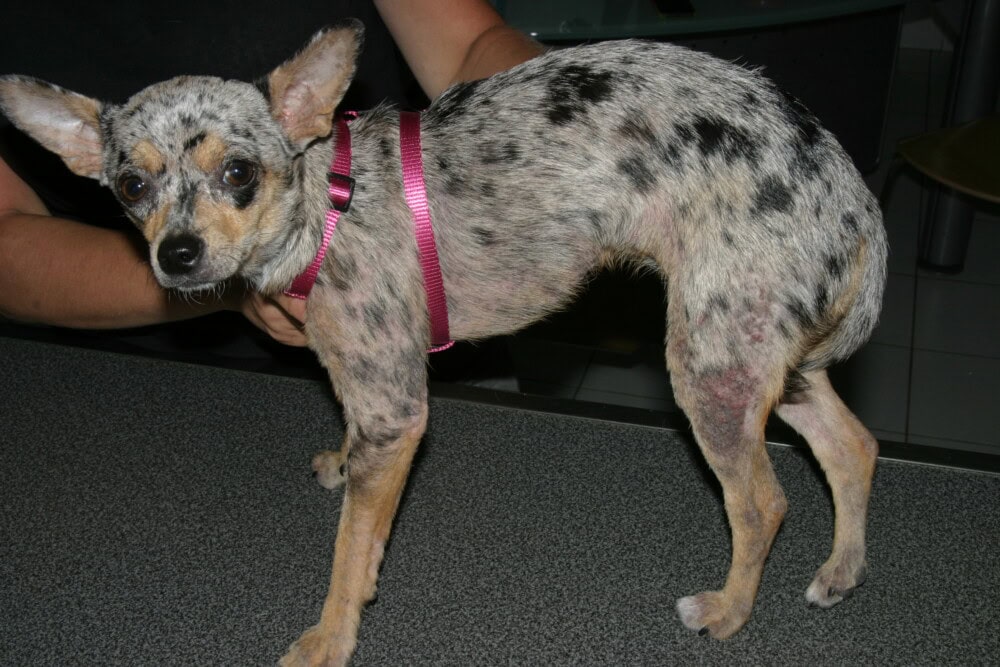
The arrival of isoxazolines has led to a very significant decrease in the prevalence of certain parasitic dermatoses such as demodicosis
The pharmaceutical form selected for commercialisation is a beef-flavoured chewable tablet, the palatability of which has been evaluated in several trials showing voluntary acceptance by the majority of dogs at first presentation (Letendre 2014). If the dog does not accept the tablet directly, it may be mixed with food without significant modification of bioavailability. The product is packaged in boxes containing blister packs of chewable tablets for dogs, with dosage adapted to the dog’s weight. NEXGARD (Boehringer Laboratories) is available in four presentations covering weight ranges of 2 to 4 kg, 4 to 10 kg, 10 to 25 kg and 25 to 50 kg, delivering a dose of afoxolaner of between 2.5 and 6.3 mg/kg of body weight.
NEXGARD SPECTRA (Boehringer Laboratories) combines afoxolaner with milbemycin oxime, a macrocyclic lactone, in a single chewable tablet. This combination extends the antiparasitic spectrum to digestive nematodes, notably Toxocara canis, Ancylostoma caninum and Trichuris vulpis, as well as the prevention of dirofilariosis caused by Dirofilaria immitis. The dosages of NEXGARD SPECTRA are adjusted to deliver a minimum dose of 2.5 mg/kg of afoxolaner and 0.5 mg/kg of milbemycin oxime, across five presentations covering weight ranges of 1.35 to 3.5 kg, 3.5 to 7.5 kg, 7.5 to 15 kg, 15 to 30 kg and 30 to 60 kg. The minimum weight for use of NEXGARD SPECTRA has been lowered to 1.35 kg. Precision of dosage according to weight is a critical element of prescription and requires systematic weighing before each administration.
The advantage of chewable tablets over topical spot-on formulations lies in several clinically relevant points. Therapeutic compliance is improved by the simplicity of oral administration and the palatability of the product. Efficacy is not affected by bathing, swimming or exposure to rain, unlike topical formulations whose cutaneous distribution may be compromised by contact with water (Letendre 2014). The risk of transfer of active substance to children or pets sharing the treated dog’s basket is eliminated. In daily clinical practice, these properties facilitate the management of infestations in multi-animal households and in dogs with significant outdoor activity.
1.2 Mechanism of action
Afoxolaner acts as a non-competitive antagonist of ligand-gated chloride channels, targeting in particular channels gated by gamma-aminobutyric acid (GABA) and by glutamate in arthropods (Ozoe 2013). Blockade of these channels inhibits pre- and post-synaptic transfer of chloride ions across neuronal cell membranes of the ectoparasite, causing uncontrolled hyperexcitation of the central nervous system, followed by paralysis and death of the insect or acarid. Fleas and ticks must feed on the treated host to be exposed to circulating afoxolaner; the action is therefore systemic and not repellent.
The selectivity of toxicity between arthropods and mammals is based on structural differences in GABA receptors. Isoxazolines generally present a markedly higher affinity for invertebrate GABA receptors (Weber 2016). However, recent data show that afoxolaner can partially inhibit certain subtypes of mammalian receptors, justifying regulatory monitoring. Furthermore, glutamate-gated chloride channels, which constitute a major target of isoxazolines in arthropods, are absent from the nervous system of vertebrates, contributing to the high safety margin of this class (Merola 2012). In vitro experiments have confirmed that afoxolaner is not a substrate of P-glycoprotein (the efflux transporter encoded by the ABCB1 gene), which differentiates it from macrocyclic lactones on a central point regarding interactions at the level of the blood-brain barrier (Drag 2022).
Milbemycin oxime, the endectocidal component of NEXGARD SPECTRA, acts via a complementary mechanism by activating glutamate-gated chloride channels (GluCl) present in nematodes and arthropods, causing flaccid paralysis and death of the parasite (Noack 2021). This antiparasitic synergy between the two molecules allows extended spectral coverage, covering both ectoparasites (fleas, ticks, mites) via afoxolaner and endoparasites (gastrointestinal nematodes, Dirofilaria immitis) via milbemycin oxime.
1.3 Pharmacokinetics in the dog
Following oral administration in dogs, afoxolaner presents rapid and substantial digestive absorption. Absolute bioavailability is 74% for NEXGARD and 88.3% for the combined formulation in NEXGARD SPECTRA (Letendre 2014, Letendre 2016). The mean maximum plasma concentration (Cmax) is 1655 +/- 332 ng/mL, reached within 2 to 4 hours (Tmax) after administration of a dose of 2.5 mg/kg. Plasma concentration-time curves follow a two-compartment model and show proportional increases with dose over the interval of 1.0 to 40 mg/kg (Letendre 2014).
Tissue distribution is extensive, with a volume of distribution of 2.6 +/- 0.6 L/kg after intravenous administration. Plasma protein binding exceeds 99.9%, explaining the persistence of effective plasma concentrations throughout the entire monthly dosing interval. The terminal elimination half-life is approximately 15.5 +/- 7.8 days in most dogs, which constitutes the pharmacokinetic basis for monthly administration (Letendre 2014). However, this half-life may vary according to breed: in Collies receiving a dose of 25 mg/kg, the half-life could reach 47.7 days, without any observed consequence on safety of use.
The metabolism of afoxolaner is primarily hepatic, via hydroxylation, leading to a major metabolite identified in the plasma, urine and bile of the dog. Elimination occurs predominantly via the biliary route, with a secondary urinary fraction. Systemic clearance is 5.0 +/- 1.2 mL/h/kg. A strong correlation has been established between plasma concentration of afoxolaner and antiparasitic efficacy, with EC90 values of 23 ng/mL for Ctenocephalides felis and greater than or equal to 100 ng/mL for Rhipicephalus sanguineus sensu lato and Dermacentor variabilis (Letendre 2014).
Regarding milbemycin oxime in NEXGARD SPECTRA, Tmax is 1 to 2 hours, oral bioavailability is 80.5% for form A3 and 65.1% for form A4, and the elimination half-life is 1.6 +/- 0.4 days for form A3 and 3.3 +/- 1.4 days for form A4 (Letendre 2016). The absence of significant pharmacokinetic interaction between the two molecules in the combined formulation has been demonstrated.
1.4 Dosage and conditions of administration in clinical practice
The systemic exposure range validated by the marketing authorisation extends from 2.7 to 7.0 mg/kg of afoxolaner for single tablets (NEXGARD), whilst the NEXGARD SPECTRA combination delivers a targeted exposure of 2.50 to 5.36 mg/kg of afoxolaner. For NEXGARD SPECTRA, the target dose is 2.5 to 5 mg/kg of afoxolaner combined with 0.5 to 1 mg/kg of milbemycin oxime. The choice of tablet is determined by the corresponding weight range. The influence of feeding on bioavailability has been evaluated and, although concomitant administration with food may slightly increase absorption, the product may be administered with or without food without clinically significant impact on efficacy.
The European marketing authorisation (MA) was granted in 2014 for NEXGARD and in 2015 for NEXGARD SPECTRA by the European Medicines Agency (EMA). The European marketing authorisation number corresponds to the centralised procedure. The officially registered indications include treatment of infestations by fleas (Ctenocephalides felis and C. canis) and ticks (Dermacentor reticulatus, Ixodes ricinus, Ixodes hexagonus, Rhipicephalus sanguineus). Since July 2025, NEXGARD and NEXGARD SPECTRA have benefited from two additional official indications: the prevention of canine babesiosis, defined as the reduction of the risk of transmission of Babesia canis by Dermacentor reticulatus, and the reduction of the risk of transmission of Dipylidium caninum by fleas. For NEXGARD SPECTRA, the indications also extend to the prevention of dirofilariosis (Dirofilaria immitis) and the treatment of gastrointestinal nematode infestations. The shelf life of the product and particular precautions for storage (temperature below 30 degrees Celsius) are specified in the summary of product characteristics. The particular precautions for the disposal of unused medicinal products or waste materials derive from current regulations.
Chapter 2 — Generalised demodicosis caused by Demodex canis
2.1 Pathophysiology of demodicosis: immune dysregulation, racial factors and genetic predispositions
Demodicosis caused by Demodex canis results from excessive proliferation of the commensal mite Demodex canis within the hair follicles and sebaceous glands, promoted by dysregulation of specific T-cell immunity directed against this mite. The transition from asymptomatic commensal carriage, present in the vast majority of healthy dogs, to clinical demodicosis involves a deficit in the type 1 T helper lymphocyte response and local immune anergy. The IL-10/TGF-beta signalling pathway is overexpressed in lesions of generalised demodicosis, contributing to the suppression of anti-parasitic effector mechanisms (Ferrer 2014). The increase in regulatory T lymphocytes (Treg) CD4+CD25+FoxP3+ in the perifollicular dermis of dogs affected by generalised demodicosis, compared to healthy controls, has been documented and suggests a central role for local immunosuppression in the permissiveness to mite proliferation. Studies using real-time PCR have demonstrated that isoxazolines, at recommended therapeutic doses, do not modify Demodex populations in healthy dogs, confirming that efficacy is linked to the elimination of pathologically excessive mites and not to the eradication of commensal carriage (Silbermayr 2017). The distinction between juvenile demodicosis (onset before 18 months) and adult demodicosis (onset after 4 years) remains clinically relevant: the adult form requires investigation for an underlying immunosuppressive cause (hypothyroidism, hyperadrenocorticism, neoplasia, iatrogenic immunosuppression).
Certain breeds show a marked predisposition to generalised demodicosis. The Staffordshire Bull Terrier, American Staffordshire Terrier, Shar-Pei and French Bulldog are among the breeds most frequently represented in recent clinical studies (Lebon 2018). In the Shar-Pei, generalised demodicosis frequently manifests as extensive erosive lesions of the interdigital spaces and face, with deep recalcitrant bacterial superinfection. In the American Staffordshire Terrier, the clinical presentation typically combines multifocal erythematous alopecia of the trunk and extremities, with generally rapid therapeutic response to isoxazolines (Lebon 2018). The French Bulldog preferentially develops facial and periocular lesions with adherent follicular casts. No specific susceptibility gene has been formally identified for canine demodicosis to date, unlike other genodermatoses such as ichthyosis in the Golden Retriever linked to the PNPLA1 mutation or canine atopic dermatitis associated with filaggrin defects.
.
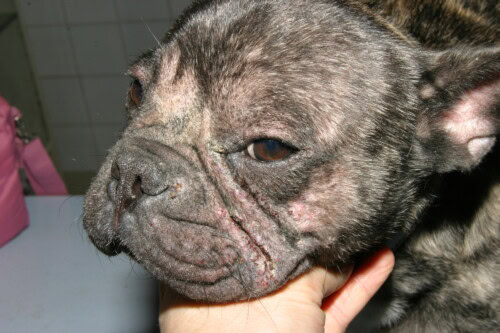
Juvenile demodicosis in a French Bulldog
2.2 Controlled clinical efficacy data: reduction in Demodex counts and parasitological cure
The efficacy of afoxolaner in the treatment of generalised demodicosis has been demonstrated in several controlled studies. In a laboratory study comparing afoxolaner (NEXGARD, minimum dose of 2.5 mg/kg) with the imidacloprid/moxidectin combination (ADVOCATE ND, Bayer) in 16 dogs with generalised demodicosis, reductions in mite counts were 99.2%, 99.9% and 100% at days 28, 56 and 84 respectively in the afoxolaner group, compared with 89.8%, 85.2% and 86.6% in the comparator group (p < 0.05 at each evaluation) (Beugnet 2016a). Improvement in skin lesions was significantly more rapid in the group treated with afoxolaner.
A European multicentre field study, conducted at veterinary dermatology referral centres in France, Italy and Poland, included 50 dogs (48 completing the study) with generalised demodicosis, treated orally with afoxolaner (NEXGARD or NEXGARD SPECTRA) on three occasions at monthly intervals (Lebon 2018). The combined efficacy of the two formulations was 79.8% at D28, 93.5% at D56 and 95.8% at D84 in terms of reduction in mite counts. Severity of skin lesions and pruritus showed significant improvement (p < 0.0001) at D84. Both formulations were well tolerated with no treatment-related adverse events.
A controlled, single-blind, randomised study with a negative control group compared the efficacy of NEXGARD and NEXGARD SPECTRA in 24 dogs with generalised demodicosis (Rehbein 2018). Three monthly administrations of NEXGARD resulted in a 99.9% reduction in mite counts at D84, whilst NEXGARD SPECTRA achieved 100% efficacy at D84, with complete absence of live mites in skin scrapings from all dogs in this group. Hair regrowth, assessed by clinical scoring, was significantly greater in both treated groups compared with the control group (p < 0.0001).
2.3 Therapeutic protocols: administration intervals, cure criteria and minimum treatment duration
The recommended therapeutic protocol for generalised demodicosis is based on monthly oral administration of afoxolaner (NEXGARD, 2.5 mg/kg or NEXGARD SPECTRA, 2.5 mg/kg of afoxolaner and 0.5 mg/kg of milbemycin oxime) for at least three consecutive months. Parasitological cure is defined by obtaining two series of negative deep skin scrapings, performed one month apart, from all previously positive lesional sites. As the biological cycle of Demodex canis extends over a period of 18 to 24 days, a single negative scraping cannot be considered a reliable indicator of complete remission (Beugnet 2016a).
In practice, the majority of dogs require three to four months of treatment to achieve parasitological cure. Severe cases with associated deep pyoderma may require a more prolonged duration. Concurrent antimicrobial treatment of bacterial superinfections is essential and should be guided by bacteriological culture with antimicrobial sensitivity testing in refractory cases. Monthly clinical monitoring, including examination of skin scrapings, photodocumentation of lesions and evaluation of the lesion score, constitutes the basis of therapeutic follow-up.
Chapter 3 — Sarcoptic mange caused by Sarcoptes scabiei var. canis
3.1 Pathophysiology of sarcoptic hypersensitivity and diagnostic difficulties in general practice
Sarcoptic mange caused by Sarcoptes scabiei var. canis is a highly contagious parasitic dermatitis, characterised by intense pruritus, crusting papules and extensive alopecia. The pathophysiology is based on a type I and type IV hypersensitivity reaction directed against the antigens of the mite and its excretory products. Specific anti-Sarcoptes IgE induce early mast cell degranulation, whilst the delayed cellular component maintains chronic cutaneous inflammation, with eosinophilic and lymphocytic perivascular infiltrate. The oto-pedal reflex, although not pathognomonic, has a sensitivity of approximately 80% in typical presentations.
Diagnosis remains challenging in general practice as demonstration of the mite by skin scrapings is obtained in fewer than 50% of infested cases, owing to the low parasitic burden sufficient to induce a clinically significant immune response. The scraping technique should prioritise the transition zones between healthy and lesional skin, particularly the edges of the ear pinnae, elbows and hocks, where the probability of finding mites is greatest. Examination of more than 90% of dogs presenting with typical clinical signs of sarcoptic mange allowed Sarcoptes scabiei to be identified as the aetiological agent in a screening study of 106 dogs (Hampel 2018). Anti-Sarcoptes serology by ELISA constitutes a complementary diagnostic tool, with reported sensitivity of 84 to 92% and specificity of 90 to 96% depending on the study, but the seroconversion delay of 2 to 5 weeks after infestation limits its usefulness in very recent presentations. Empirical anti-sarcoptic treatment frequently constitutes an indirect diagnostic tool when scrapings remain negative.
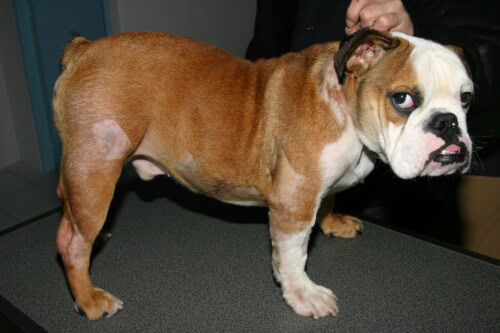
Sarcoptic mange in an English Bulldog
3.2 Comparative efficacy of afoxolaner alone and the afoxolaner-milbemycin oxime combination: numerical data
The first field study validating the efficacy of afoxolaner against sarcoptic mange was published in 2016 (Beugnet 2016b). In this randomised controlled trial, 20 dogs naturally infested by Sarcoptes scabiei var. canis, confirmed by skin scrapings prior to inclusion, were divided into two equal groups; the treated group received NEXGARD (minimum dose of 2.5 mg/kg) at D0 and D28. Treated dogs presented significantly lower mite counts than untreated controls at D28 and D56 (p < 0.001), with complete absence of mites in scrapings at both time points (100% efficacy). Lesional resolution was significantly better at D56: no treated dog presented pruritus (compared with 7/10 in the control group), 1/9 treated dog retained crusts (compared with 5/10 controls) and 8/9 treated dogs had recovered 90% of their coat over the lesional areas (compared with 0/10 controls).
A multicentre field clinical study, conducted in Portugal and Germany, evaluated the efficacy of NEXGARD and NEXGARD SPECTRA in 80 dogs naturally infested by Sarcoptes scabiei var. canis, of which 65 cases were evaluable at the end of the study (Hampel 2018). Dogs received two oral administrations one month apart according to the marketing authorisation instructions. The reduction in geometric mean counts of live mites was 98.9% and 99.7% for dogs treated with NEXGARD (n = 38) at one month and two months respectively, and 99.6% and 100% for dogs treated with NEXGARD SPECTRA (n = 27) at the same time points (p < 0.001 for both treatments). Both treatments resulted in significant improvement in pruritus, papules and crusts, and alopecia at one and two months after initiation of treatment (p = 0.0001). No treatment-related adverse effects were observed in dogs completing the study.
3.3 Treatment protocols, management of in-contact animals and prevention of reinfestation
The recommended protocol for sarcoptic mange caused by Sarcoptes scabiei var. canis consists of two oral administrations of NEXGARD or NEXGARD SPECTRA one month apart. The rapid acaricidal action of afoxolaner allows significant reduction of the parasitic burden from the first month of treatment, with resolution of pruritus often notable within 7 to 14 days following the first administration. Animals in contact within the same household must be treated simultaneously to prevent reinfestations, as the contagiousness of Sarcoptes scabiei var. canis is high through direct contact. Environmental treatment is generally not necessary owing to the short survival of the mite away from the host (a few days at room temperature), but washing the dog’s bedding and basket is recommended. Sarcoptic mange is a potential zoonosis: human lesions, localised to areas of contact with the infested animal, resolve spontaneously after treatment of the definitive host.
Chapter 4 — Otoacariasis caused by Otodectes cynotis
4.1 Pathophysiology of auricular infestation and associated periauricular skin lesions
Otodectes cynotis is a highly contagious, non-burrowing, surface mite that colonises principally the external auditory canals of dogs and cats. Its complete biological cycle, lasting approximately 21 days, takes place entirely on the host. The mechanical and immunological irritation associated with the presence of the mites and their excretory products induces a pruritic ceruminous external otitis, with excessive production of dark brown cerumen. The prevalence of otoacariasis varies according to the populations studied, but Otodectes cynotis represents one of the most frequent aetiological agents of external otitis in puppies and young dogs. In severe infestations, mites may be found outside the auditory canal, on the head, back and tail of the animal, causing pruritic, erythematous and papulocrustaceous periauricular skin lesions. The local immune response involves a type I hypersensitivity component with mast cell degranulation, explaining the intensity of auricular pruritus which is sometimes disproportionate to the parasitic burden. Bacterial and fungal superinfections, notably with Malassezia pachydermatis, frequently complicate the clinical picture and require specific therapeutic management in addition to the acaricidal treatment.
4.2 Efficacy data for NexGard Spectra in canine otoacariasis: results of clinical studies
The efficacy of afoxolaner against Otodectes cynotis has been evaluated in several experimental and field studies. A first controlled laboratory study demonstrated that a single oral administration of afoxolaner at the minimum dose of 2.5 mg/kg results in a 98.5% reduction (geometric means) and 99.4% reduction (arithmetic means) in the count of live mites at D28, compared with the untreated control group (p < 0.05) (Carithers 2016). At D28, two of eight dogs in the treated group still harboured a residual number of mites (1 and 4 mites respectively), compared with seven of eight dogs in the control group.
A field study conducted in Italy on 20 naturally infested dogs confirmed these results: two monthly oral administrations of afoxolaner (NEXGARD) achieved 100% efficacy based on live mite counts at D42 following auricular rinsing (Panarese 2021). Improvement in clinical scores (cerumen, auricular debris) was significant from D30. A recent study conducted in Greece on 32 naturally infested dogs compared a single administration of NEXGARD (n = 8), two monthly administrations of NEXGARD (n = 8) and two monthly administrations of NEXGARD SPECTRA (n = 8) with a control group (n = 8). All three treated groups showed a 99.9% reduction in mite counts at D45, with no reported adverse effects (Kostopoulou 2024).
4.3 Combined therapeutic strategy: systemic treatment and local management
Treatment of otoacariasis by the systemic oral route constitutes a major advantage over traditional topical auricular treatments, which require repeated instillations that are difficult to administer in painful or uncooperative animals. Afoxolaner, distributed systemically, reaches mites at all their locations, including outside the auditory canal, limiting the risk of ectopic parasitic persistence. In cases of associated secondary external otitis with bacterial or fungal superinfection with Malassezia pachydermatis documented in several studies, complementary local treatment with an auricular cleanser and appropriate topical antibiotic or antifungal is recommended. Treatment of all animals in the household is imperative owing to the high contagiousness of Otodectes cynotis.
Chapter 5 — Flea control and flea allergy dermatitis (FAD)
5.1 Pathophysiology of hypersensitivity to flea saliva: immunological mechanisms
Flea allergy dermatitis (FAD) represents the most frequent allergic dermatosis in dogs in areas of flea endemicity. The pathophysiology is based on hypersensitivity to salivary allergens of Ctenocephalides felis, involving type I (immediate, IgE-dependent), type IV (delayed, T-lymphocyte) and potentially type III (immune complexes) mechanisms. The major salivary allergens of the flea, notably high molecular weight proteins, trigger a cutaneous inflammatory cascade with recruitment of eosinophils, mast cells and CD4+ T lymphocytes in the superficial dermis. The triggering threshold is extremely low in sensitised animals: a single flea bite may be sufficient to induce a pruritic flare lasting several days. The clinical lesions of FAD are typically concentrated on the lumbosacral region, the base of the tail, the caudal surface of the thighs and the ventral abdomen, forming an evocative clinical picture, though not pathognomonic. Self-induced alopecia, excoriations and secondary lichenification constitute the clinical markers of chronicity. In certain predisposed breeds, such as the German Shepherd, Labrador and Golden Retriever, FAD frequently coexists with canine atopic dermatitis, complicating the differential diagnosis and therapeutic management.
5.2 Lethal kinetics against Ctenocephalides spp. and impact on the dynamics of environmental infestation
Afoxolaner presents rapid lethal kinetics against Ctenocephalides felis. In a study of speed of action, NEXGARD demonstrated the onset of adult flea mortality as early as 30 minutes after initial administration (Beugnet 2015), with efficacy of 99.7 to 100% between 8 and 24 hours (Kunkle 2014). Curative efficacy against pre-existing infestations is 15.0% at 2 hours and 99.5% at 8 hours (Kunkle 2014), whilst another study shows induced mortality of 45.7% after 30 minutes of exposure (Beugnet 2015). Preventive efficacy against weekly reinfestations by Ctenocephalides felis was maintained at more than 99% at 24 hours after each reinfestation for 35 days (Hunter 2014). Overall preventive efficacy was maintained at more than 95% within 12 hours of each weekly infestation for at least 3 weeks, and within 24 hours for at least 5 weeks (Beugnet 2015).
The product kills fleas before egg-laying, which interrupts the reproductive cycle and prevents contamination of the domestic environment. As the flea is the intermediate host of the cestode Dipylidium caninum, the rapid elimination of fleas also reduces the risk of infestation by this tapeworm: since July 2025, NEXGARD and NEXGARD SPECTRA carry an official indication for reducing the risk of transmission of Dipylidium caninum by fleas. A field study conducted in Florida demonstrated that monthly treatment with afoxolaner in infested dogs results in a 96.7% reduction in flea counts in the domestic environment at D28-30 and 98.9% at D82-86 (Dryden 2016). Environmental treatment (regular vacuuming, insecticidal treatment of surfaces) remains recommended in cases of massive infestation, but regular treatment of the animal constitutes the cornerstone of environmental control. All animals in the household, including cats (with a product appropriate for the species), must be treated simultaneously to avoid cross-reinfestations. Immature flea stages (eggs, larvae, pupae) infest the dog’s bedding, basket and regular sleeping areas.
5.3 Place of afoxolaner in the multimodal therapeutic strategy for FAD
Strict control of flea exposure constitutes the aetiological treatment of FAD. Afoxolaner, through its rapid lethal kinetics (elimination of adult fleas before egg-laying within 8 to 24 hours following the blood meal), reduces the salivary antigenic burden to which the allergic dog is exposed. The FDA approved in 2023 the extension of indication of afoxolaner for the improvement of clinical signs of flea allergy dermatitis (FAD), following a multisite 90-day field study demonstrating resolution of clinical signs in dogs affected by flea bites treated with afoxolaner at a dose of 2.5 mg/kg. In Europe, the integration of afoxolaner into the multimodal therapeutic arsenal for FAD has been officially validated by the EMA since the initial registration of the medicinal product in 2014. The multimodal therapeutic strategy for FAD combines continuous monthly antiparasitic treatment with afoxolaner (continuous protection, including during the winter season in areas with a temperate climate where fleas survive indoors), symptomatic treatment of pruritus during the acute phase (short-course corticosteroid therapy, oclacitinib, lokivetmab), and rigorous environmental management. The particular precautions for use recall that afoxolaner acts systemically after biting: the risk of transmission of pathogenic agents by fleas is not totally excluded by a non-repellent acaricide/insecticide.
Chapter 6 — Treatment of tick infestations
6.1 Dermacentor reticulatus: geographical distribution, seasonality and protection against piroplasmosis
Dermacentor reticulatus is a three-host tick widely distributed across continental Europe, with documented geographical expansion over the past two decades, favoured by climatic changes and movements of companion animals. Its seasonal activity presents two peaks, autumnal and vernal, with possible winter activity in areas with a mild climate. In France, Dermacentor reticulatus is present throughout mainland territory, with increased density in areas of damp grassland and forest edges. Dermacentor reticulatus is the principal vector of Babesia canis in Europe, the agent of canine piroplasmosis whose mortality rate reaches 10 to 20% in the absence of early treatment.
The acaricidal efficacy of afoxolaner against Dermacentor reticulatus has been demonstrated in several controlled studies. Oral administration of afoxolaner (NEXGARD) at a mean dose of 2.7 mg/kg eliminated pre-existing infestations with more than 99% efficacy at 48 hours post-treatment and controlled weekly reinfestations with more than 96% efficacy for 30 days against both European species tested (Dermacentor reticulatus and Ixodes ricinus) (Dumont 2014). A controlled experimental study demonstrated for the first time the ability of afoxolaner (NEXGARD) to block transmission of Babesia canis by Dermacentor reticulatus ticks: none of the treated dogs developed infection after repeated infestations with carrier ticks, whilst all controls developed clinically confirmed babesiosis (Beugnet 2014). This was the first demonstration that an oral acaricide could prevent transmission of a pathogen despite the necessity for the tick to attach and begin its blood meal before being killed. Analogous blockade of transmission was subsequently established for Babesia rossi carried by Haemaphysalis elliptica, in an African epidemiological context (Beugnet 2019).
More recently, the preventive efficacy of the afoxolaner-milbemycin oxime combination (NEXGARD SPECTRA) against transmission of Babesia canis by Dermacentor reticulatus was confirmed in a controlled, randomised, blinded experimental study (Tielemans 2025). Following a single oral administration at D0 at the minimum recommended dose, none of the treated dogs presented clinical signs of babesiosis nor PCR or serological positivity after two infestations (D1 and D28) by infected ticks, whilst all control dogs developed the infection. These data formed the basis for the official extension of indication, effective from July 2025, of both NEXGARD and NEXGARD SPECTRA to the prevention of canine babesiosis (reduction of the risk of transmission of Babesia canis by Dermacentor reticulatus).
6.2 Ixodes ricinus: principal vector species in France and reduction of the risk of transmission of Lyme borreliosis and anaplasmosis
Ixodes ricinus is the most frequently encountered tick in Europe, representing up to 59.5% of ticks collected from humans in certain surveillance studies (Ixodes ricinus is identified as the most frequently found species). Its activity extends from March to November, with bimodal vernal and autumnal peaks. Ixodes ricinus is the vector of Borrelia burgdorferi sensu lato (agent of Lyme borreliosis), Anaplasma phagocytophilum, Babesia spp. and flaviviruses responsible for tick-borne encephalitis.
The acaricidal speed of action of afoxolaner against Ixodes ricinus was evaluated in a dedicated study: the lethal effect is observed as early as 12 hours post-infestation, with complete efficacy at 24 hours maintained throughout the entire month following administration of NEXGARD (Halos 2014). In this study conducted on 12 Beagles in a controlled, blinded design, weekly reinfestations with 40 female and 10 male Ixodes ricinus were evaluated at 12 and 24 hours post-infestation for 28 days. Acaricidal efficacy exceeded 90% from 12 hours and reached 100% at 24 hours at each weekly evaluation. This speed of destruction is clinically significant as transmission of Borrelia burgdorferi generally requires more than 24 hours of tick attachment, which confers high protection against Lyme borreliosis in treated dogs. Two controlled laboratory studies confirmed the efficacy of afoxolaner in the prevention of Borrelia burgdorferi infections following infestation by vector Ixodes ticks at D28 post-treatment. Protection against transmission of Anaplasma phagocytophilum, which also requires a prolonged attachment period (24 to 48 hours), is anticipated but merits specific confirmatory studies.
6.3 Ixodes hexagonus: the hedgehog tick and companion dogs
Ixodes hexagonus, commonly known as the “hedgehog tick”, is an endophilic tick frequently found in companion dogs in periurban areas, particularly in dogs with access to gardens frequented by hedgehogs. This species is a potential vector of Borrelia spp. and Anaplasma phagocytophilum. The European marketing authorisation for NEXGARD and NEXGARD SPECTRA includes Ixodes hexagonus among the tick species covered, on the basis of demonstration of the acaricidal activity of afoxolaner against this species. Efficacy data show activity comparable to that observed against Ixodes ricinus, with elimination of ticks within 48 hours of infestation during the one-month protection period.
6.4 Rhipicephalus sanguineus: Mediterranean distribution and protection against Babesia canis and Ehrlichia canis
Rhipicephalus sanguineus sensu lato, the brown dog tick, has a predominantly Mediterranean and tropical distribution. Its adaptation to domestic environments allows it to multiply indoors, including in kennels and dwellings, with populations capable of reaching high densities in the absence of treatment. Unlike exophilic ticks such as Ixodes ricinus and Dermacentor reticulatus, Rhipicephalus sanguineus can complete several full biological cycles per year in subtropical regions, whilst in temperate Mediterranean regions, adult activity is concentrated in spring and summer, with emergence of immature stages in autumn. This epidemiological particularity implies that anti-tick protection must be maintained continuously, including in the late season, in areas endemic for Rhipicephalus sanguineus. Rhipicephalus sanguineus is the vector of Ehrlichia canis (agent of canine monocytic ehrlichiosis), Babesia canis vogeli, Hepatozoon canis and Bartonella spp. Transmission of Ehrlichia canis can begin within the first hours following tick attachment, which gives particular importance to the acaricidal speed of action of the product used.
The efficacy of afoxolaner against Rhipicephalus sanguineus has been demonstrated with more than 93% efficacy at 48 hours post-infestation for 30 days in controlled laboratory studies. A comparative study evaluating the ability of afoxolaner (NEXGARD), fluralaner (BRAVECTO ND) and permethrin/imidacloprid (ADVANTIX ND) to block transmission of Ehrlichia canis by infected Rhipicephalus sanguineus ticks showed that afoxolaner protected 75% of treated dogs against seroconversion, compared with 100% for permethrin/imidacloprid, which combines an acaricidal and repellent effect (Fourie 2016). This result highlights a clinical nuance: isoxazolines, acting systemically after attachment and commencement of the tick’s blood meal, cannot guarantee 100% protection against pathogens whose transmission begins within the first hours of attachment, such as Ehrlichia canis or certain rickettsiae.
Hyalomma marginatum is a large tick, originating from the Mediterranean basin and North Africa, whose geographical expansion northwards into France has been documented since the 2010s, favoured by climate warming and passive transport by migratory birds. This species is the principal vector of the Crimean-Congo haemorrhagic fever (CCHF) virus, an arboviral infection with high zoonotic potential. Following controlled clinical studies demonstrating robust acaricidal efficacy, the European Medicines Agency (EMA) has officially validated and incorporated the species Hyalomma marginatum into the marketing authorisation indications for afoxolaner.
6.6 Practical therapeutic strategy
The strategy for prevention of tick infestations is based on an individual risk assessment, taking into account the geographical area of residence and travel of the dog, its lifestyle (outdoor access, hunting, hiking), and the local seasonality of vector species. Monthly treatment with afoxolaner offers continuous systemic acaricidal protection, with documented efficacy against the principal tick species Dermacentor reticulatus, Ixodes ricinus, Ixodes hexagonus and Rhipicephalus sanguineus, thus covering infestations by the most frequent ticks in companion dogs in Europe. The choice between NEXGARD and NEXGARD SPECTRA depends on the patient’s endoparasitic coverage requirements: in areas endemic for Dirofilaria immitis (southern France, Italy, Spain, Portugal), the formulation combining milbemycin oxime offers the advantage of integrated ectoparasitic and endoparasitic prevention in a single monthly tablet. In areas where the dirofilarial risk is negligible, NEXGARD alone ensures equivalent ectoparasitic coverage.
Complementarity with a topical repellent acaricide, such as permethrin in spot-on or collar form, may be considered in situations of high-risk exposure, particularly in areas endemic for piroplasmosis or ehrlichiosis, where prevention of tick attachment (repellent effect) constitutes an additional advantage over the exclusively acaricidal effect of isoxazolines. This combined approach, associating a systemic acaricide (afoxolaner) and a topical repellent (permethrin), is advocated by several European experts for dogs with a high-risk lifestyle involving exposure (hunting dogs, sheepdogs, dogs practising canicross or hiking in woodland areas). The recommendation for continuous treatment, 12 months per year rather than seasonal, is supported by recent data showing winter activity of Ixodes ricinus and Dermacentor reticulatus ticks in certain European regions (Probst 2023). The ESCCAP (European Scientific Council Companion Animal Parasites) recommends continuous anti-tick protection for dogs at risk of exposure. Unnecessary use of antiparasitic agents or use that does not comply with the SPC instructions may increase the selection pressure for resistance and lead to a reduction in efficacy.
Chapter 7 — Safety profile, tolerability and at-risk populations
7.1 Identified adverse effects and pharmacovigilance data
7.1.1 Gastrointestinal effects and general manifestations
The most frequently reported adverse effects with afoxolaner are gastrointestinal in nature, including vomiting and diarrhoea, observed infrequently and generally transient, resolving spontaneously without treatment. Lethargy and anorexia have also been reported, with very low frequency. In safety margin studies in Beagle puppies aged 8 to 9 weeks treated at 1, 3 and 5 times the maximum exposure dose at intervals of 28 then 14 days (i.e. 6 administrations in total over 126 days), the effects observed (vomiting, diarrhoea, decreased appetite) were noted in both treated and control groups, suggesting uncertain attribution to treatment (Drag 2017). No clinically significant haematological, biochemical or urinary abnormalities were attributed to treatment in these safety margin studies. Body weight and food consumption remained comparable between treated and control groups. The acute oral LD50 of afoxolaner in the rat is greater than 1000 mg/kg and the dermal LD50 greater than 2000 mg/kg, attesting to a wide toxicological safety margin in mammals.
7.1.2 Neurological adverse effects
In September 2018, the American FDA issued an alert concerning the isoxazoline class (afoxolaner, fluralaner, sarolaner, lotilaner), signalling neurological effects reported in certain dogs, including muscle tremors, ataxia and seizures. Seizures have been reported in dogs receiving isoxazolines, including in animals with no history of epilepsy. FDA pharmacovigilance data covering the period from January 2013 to September 2017 report 32,374 reportable adverse events for all isoxazolines, with a seizure rate of 6.9% of reports for afoxolaner. An absolute frequency categorised as very rare (fewer than one case per 10,000 treatments) according to the EMA SPC (Donohoe 2020). These figures must be interpreted with caution as they represent spontaneous reports (with recognised underreporting) and not incidence rates in the treated population. The causal nature has not been established for each individual report.
The European (EMA) and American (FDA) regulatory agencies have maintained a favourable benefit/risk assessment for isoxazolines, whilst imposing precautionary statements on the package leaflets. The SPC (Summary of Product Characteristics) specifies that mild gastrointestinal adverse effects, pruritus, lethargy, anorexia and neurological signs (seizures, ataxia, muscle tremors) have been reported very rarely (fewer than one animal in 10,000 treated). In the event of overdosage, symptoms, emergency management and antidotes should be considered: there is no specific antidote for afoxolaner and treatment of overdosage is symptomatic and supportive. Particular precautions for each target species are detailed in the SPC. The isoxazoline class as a whole is considered to present a favourable safety profile when used in accordance with the marketing authorisation recommendations.
7.2 At-risk breeds: ABCB1 (MDR1) mutation and clinical implications
7.2.1 Genetic basis of the ABCB1 mutation and canine breeds concerned
The ABCB1 mutation (formerly MDR1), consisting of a 4-nucleotide deletion, results in a premature stop codon and production of a truncated, non-functional P-glycoprotein. P-glycoprotein, an efflux transporter expressed at the blood-brain barrier, in hepatocytes, enterocytes and renal tubular cells, normally ensures the exclusion of potentially neurotoxic substrates from the central nervous system. The breeds most frequently carrying this mutation include the Collie (homozygous in 35 to 70% of individuals depending on the population), the Australian Shepherd (allele frequency of 20 to 50%), the White Swiss Shepherd, the Shetland Sheepdog, the Border Collie and the Old English Sheepdog, as well as their crossbreeds.
Afoxolaner is not a substrate of P-glycoprotein, as confirmed by in vitro efflux experiments (EMA data). This property distinguishes it from macrocyclic lactones (ivermectin, milbemycin oxime, moxidectin) which are recognised substrates of this transporter. The safety of afoxolaner in MDR1-deficient homozygous Collies was specifically evaluated in two studies (Drag 2022). A total of 30 adult homozygous MDR1(-/-) Collies were treated orally: 9 with placebo, 9 with afoxolaner alone (mean dose corresponding to 3.8 to 4.7 times the maximum recommended therapeutic dose), 6 with milbemycin oxime alone (4.7 times the maximum dose) and 6 with the afoxolaner-milbemycin oxime combination. No signs of neurotoxicity were observed in the groups receiving afoxolaner alone. Use of Collies that received up to 10 times the MA dose of afoxolaner without adverse effects has been reported.
However, for milbemycin oxime present in NEXGARD SPECTRA, the increased sensitivity of MDR1-deficient dogs to macrocyclic lactones warrants caution, even though the doses used in the formulation (0.5 to 1 mg/kg) are considered safe in MDR1-deficient dogs. The afoxolaner-milbemycin oxime combination at the tested dose did not result in neurological signs in homozygous Collies (Drag 2022).
7.2.3 Practical recommendations
Genotypic screening for the ABCB1 mutation is recommended in at-risk breeds before any prescription of macrocyclic lactones at high doses. For use of NEXGARD (afoxolaner alone), no specific restriction is necessary in MDR1-deficient dogs, as afoxolaner is not a substrate of P-glycoprotein. For NEXGARD SPECTRA (afoxolaner-milbemycin oxime combination), use at recommended doses is considered safe in MDR1-deficient dogs, but clinical monitoring post-administration is recommended at first use in these breeds.
7.3 Contraindications, precautions for use and drug interactions
No absolute contraindication is mentioned in the European SPC for NEXGARD or NEXGARD SPECTRA other than hypersensitivity to the active substances or excipients. Use in puppies under 8 weeks of age and/or in dogs below the minimum weight for use (2 kg for NEXGARD, 1.35 kg for NEXGARD SPECTRA) should be based on an assessment of the benefit/risk ratio by the responsible veterinary surgeon. Use is inadvisable in dogs with a history of seizures or neurological disorders, in accordance with the class warning for isoxazolines.
7.3.2 Documented pharmacokinetic and pharmacodynamic interactions
For NEXGARD SPECTRA, potential drug interactions of milbemycin oxime have been identified with ciclosporin, azole antifungals and erythromycin, these molecules potentially inhibiting P-glycoprotein and increasing cerebral exposure to milbemycin oxime in sensitive dogs.
7.3.3 Use in puppies, pregnant and lactating females: available data
The safety of afoxolaner has been evaluated in Beagle puppies from the age of 8 weeks, at doses of up to 5 times the maximum exposure dose, without identification of treatment-related toxic effects (Drag 2017). Laboratory studies in rats and rabbits did not reveal teratogenic effects or adverse effects on reproductive capacity in males and females. Following the update of their marketing authorisation, NEXGARD and NEXGARD SPECTRA are now authorised for use in breeding females, pregnant and lactating females, which removes the previous restriction and facilitates antiparasitic management of bitches throughout the reproductive cycle. Particular precautions to be taken by the person administering the medicinal product include hand-washing after handling the product.
Conclusion
Afoxolaner, administered as a chewable tablet by the oral route (NEXGARD and NEXGARD SPECTRA, Boehringer Ingelheim Laboratories), constitutes a leading therapeutic tool in canine veterinary dermatology. Its mechanism of action on ligand-gated chloride channels of arthropods, its favourable pharmacokinetics (rapid absorption, prolonged half-life, high bioavailability) and its documented safety profile in healthy dogs as well as in MDR1-deficient breeds make it a medicine of choice for the treatment of flea and tick infestations, as well as for ectoparasitic dermatoses of dermatological interest: generalised demodicosis caused by Demodex canis, sarcoptic mange caused by Sarcoptes scabiei var. canis, and otoacariasis caused by Otodectes cynotis.
Controlled efficacy data demonstrate parasitic reduction rates exceeding 95% for all these indications, with a speed of action compatible with the clinical requirements of pruritus management and prevention of transmission of vector-borne pathogens. The combination with milbemycin oxime in NEXGARD SPECTRA offers a unique monthly endectocidal coverage including prevention of dirofilariosis caused by Dirofilaria immitis and treatment of gastrointestinal nematodes including Trichuris vulpis.
References
Beugnet F, Halos L, Larsen D, Labuschagné M, Erasmus H, Fourie J. The ability of an oral formulation of afoxolaner to block the transmission of Babesia canis by Dermacentor reticulatus ticks to dogs. Parasit Vectors. 2014,7:283.
Beugnet F, Liebenberg J, Halos L. Comparative speed of efficacy against Ctenocephalides felis of two oral treatments for dogs containing either afoxolaner or fluralaner. Vet Parasitol. 2015,207:297-301.
Beugnet F, Halos L, Larsen D, de Vos C. Efficacy of oral afoxolaner for the treatment of canine generalised demodicosis. Parasite. 2016a,23:14.
Beugnet F, de Vos C, Liebenberg J, Halos L, Larsen D, Fourie J. Efficacy of afoxolaner in a clinical field study in dogs naturally infested with Sarcoptes scabiei. Parasite. 2016b,23:26.
Beugnet F, Lebon W, de Vos C. Prevention of the transmission of Babesia rossi by Haemaphysalis elliptica in dogs treated with Nexgard. Parasite. 2019,26:49.
Carithers D, Crawford J, de Vos C, Fourie J, Liebenberg J. Assessment of afoxolaner efficacy against Otodectes cynotis infestations of dogs. Parasit Vectors. 2016,9:635.
Donohoe CL, Olson ME, Blagburn BL. Survey of canine use and safety of isoxazoline parasiticides. J Am Anim Hosp Assoc. 2020,56:256-264.
Drag M, Saik J, Harriman J, Letendre L, Larsen D. Safety evaluation of orally administered afoxolaner and milbemycin oxime in eight-week-old dogs. J Vet Pharmacol Ther. 2017,40:1-11.
Drag M, Larsen DL, Crevier Y, Halos L, Tielemans E, Liebenberg J, Jeannin P. Safety of oral afoxolaner formulated with or without milbemycin oxime in homozygous MDR1-deficient collie dogs. J Vet Pharmacol Ther. 2022,45:509-519.
Dryden MW, Canfield MS, Kalosy K, Smith A, Crevoiserat L, McGrady JC, Foley KM, Green K, Tebaldi C, Smith V, Bennett T, Heaney K, Math L, Royal C, Sun F. Evaluation of fluralaner and afoxolaner treatments to control flea populations, reduce pruritus and minimize dermatologic lesions in naturally infested dogs in private residences in west central Florida USA. Parasit Vectors. 2016,9:365.
Dumont P, Blair J, Fourie JJ, Chester TS, Larsen DL. Evaluation of the efficacy of afoxolaner against two European dog tick species: Dermacentor reticulatus and Ixodes ricinus. Vet Parasitol. 2014,201:216-219.
Ferrer L, Ravera I, Silbermayr K. Immunology and pathogenesis of canine demodicosis. Vet Dermatol. 2014,25:427-e65.
Fourie JJ, Luus HG, Stanneck D, Jongejan F. Comparative efficacy of oral administrated afoxolaner (NexGard) and fluralaner (Bravecto) with topically applied permethrin/imidacloprid (Advantix) against transmission of Ehrlichia canis by infected Rhipicephalus sanguineus ticks to dogs. Parasit Vectors. 2016,9:348.
Halos L, Lebon W, Chalvet-Monfray K, Larsen D, Beugnet F. Immediate efficacy and persistent speed of kill of a novel oral formulation of afoxolaner (NexGard) against induced infestations with Ixodes ricinus ticks. Parasit Vectors. 2014,7:452.
Hampel V, Knaus M, Schafer J, Beugnet F, Rehbein S. Treatment of canine sarcoptic mange with afoxolaner (NexGard) and afoxolaner plus milbemycin oxime (NexGard Spectra) chewable tablets: efficacy under field conditions in Portugal and Germany. Parasite. 2018,25:63.
Hunter JS, Dumont P, Chester TS, Young DR, Fourie JJ, Larsen DL. Evaluation of the curative and preventive efficacy of a single oral administration of afoxolaner against cat flea Ctenocephalides felis infestations on dogs. Vet Parasitol. 2014,201:207-211.
Kostopoulou D, Sotiraki S, Beugnet F, Tielemans E, Ligda P. Efficacy of afoxolaner or the combination of afoxolaner with milbemycin oxime against Otodectes cynotis in naturally infested dogs. Vet Parasitol. 2024,325:110082.
Kunkle BN, Drag MD, Chester TS, Larsen DL. Assessment of the onset of action of afoxolaner against existing adult flea (Ctenocephalides felis) infestations on dogs. Vet Parasitol. 2014,201:204-206.
Lebon W, Beccati M, Bourdeau P, Brement T, Bruet V, Cekiera A, Crosaz O, Darmon C, Guillot J, Mosca M, Pin D, Popiel J, Pomorska Handwerker D, Larsen D, Tielemans E, Beugnet F, Halos L. Efficacy of two formulations of afoxolaner (NexGard and NexGard Spectra) for the treatment of generalised demodicosis in dogs, in veterinary dermatology referral centers in Europe. Parasit Vectors. 2018,11:506.
Letendre L, Huang R, Kvaternick V, Harriman J, Drag M, Soll M. The intravenous and oral pharmacokinetics of afoxolaner used as a monthly chewable antiparasitic for dogs. Vet Parasitol. 2014,201:190-197.
Letendre L, Harriman J, Drag M, Mullins A, Malinski T, Rehbein S. The intravenous and oral pharmacokinetics of afoxolaner and milbemycin oxime when used as a combination chewable parasiticide for dogs. J Vet Pharmacol Ther. 2016,40:35-43.
Merola VM, Eubig PA. Toxicology of avermectins and milbemycins (macrocyclic lactones) and the role of P-glycoprotein in dogs and cats. Vet Clin North Am Small Anim Pract. 2012,42:313-333.
Noack S, Harrington J, Carithers DS, Kaminsky R, Selzer PM. Heartworm disease – overview, intervention, and industry perspective. Int J Parasitol Drugs Drug Resist. 2021,16:65-89.
Ozoe Y. gamma-Aminobutyrate- and glutamate-gated chloride channels as targets of insecticides. Adv Insect Physiol. 2013,44:211-286.
Panarese R, Iatta R, Lia RP, Lebon W, Beugnet F, Otranto D. Efficacy of afoxolaner for the treatment of ear mite infestation under field conditions. Vet Parasitol. 2021,300:109607.
Probst J, Springer A, Topp AK, Broker M, Williams H, Dautel H, Strube C. Winter activity of questing ticks (Ixodes ricinus and Dermacentor reticulatus) in Germany. Ticks Tick Borne Dis. 2023,14:102225.
Rehbein S, Fourie JJ, de Vos C, Anderson A, Larsen DL. Efficacy of once-monthly doses of oral afoxolaner and afoxolaner/milbemycin oxime in a well-controlled study for the treatment of canine generalized demodicosis. Open J Vet Med. 2018,8:250-265.
Shoop WL, Hartline EJ, Gould BR, Waddell ME, McDowell RG, Kinney JB, Lahm GP, Long JK, Xu M, Wagerle T, Jones GS, Dietrich RF, Cordova D, Schroeder ME, Rhoades DF, Benner EA, Confalone PN. Discovery and mode of action of afoxolaner, a new isoxazoline parasiticide for dogs. Vet Parasitol. 2014,201:179-189.
Silbermayr K, Glanzer S, Galler J, Krischke S. Afoxolaner and fluralaner treatment do not impact on cutaneous Demodex populations of healthy dogs. Vet Dermatol. 2017,28:468-e111.
Tielemans E, Rautenbach C, Viljoen A, Beugnet F. Efficacy of an oral combination of afoxolaner and milbemycin oxime for the prevention of transmission of Babesia canis by Dermacentor reticulatus ticks to dogs. Parasit Vectors. 2025,18:142.
Weber T, Selzer PM. Isoxazolines: a novel chemotype highly effective on ectoparasites. ChemMedChem. 2016,11:270-276.
Related Searches
nexgard, nexgard, medicinal product, veterinary, dogs, 10, 25, kg, 1, chewable, tablet, overdosage, symptoms, emergency, management, symptoms, emergency, management, antidotes, brand, against, fleas, reticulatus, ixodes, ricinus, rhipicephalus, ixodes, ricinus, rhipicephalus, sanguineus, 29, avenue, tony, garnier, storage, according, relevance, nexgard tablets
